
Beautiful inside, outside, anytime, anywhere–Beautiful Human at Haverford

Beautiful Human at Haverford College’s Cantor Fitzgerald Gallery is a small show with big thoughts that burble and pop as the works by five artists hold a conversation with each other about identity and imagination. The show’s points of view zoom from imaginative self-identificaton to masks and costumes as tribal and cultural signifiers to the tyranny of the genetic code. And those are just the starting points.
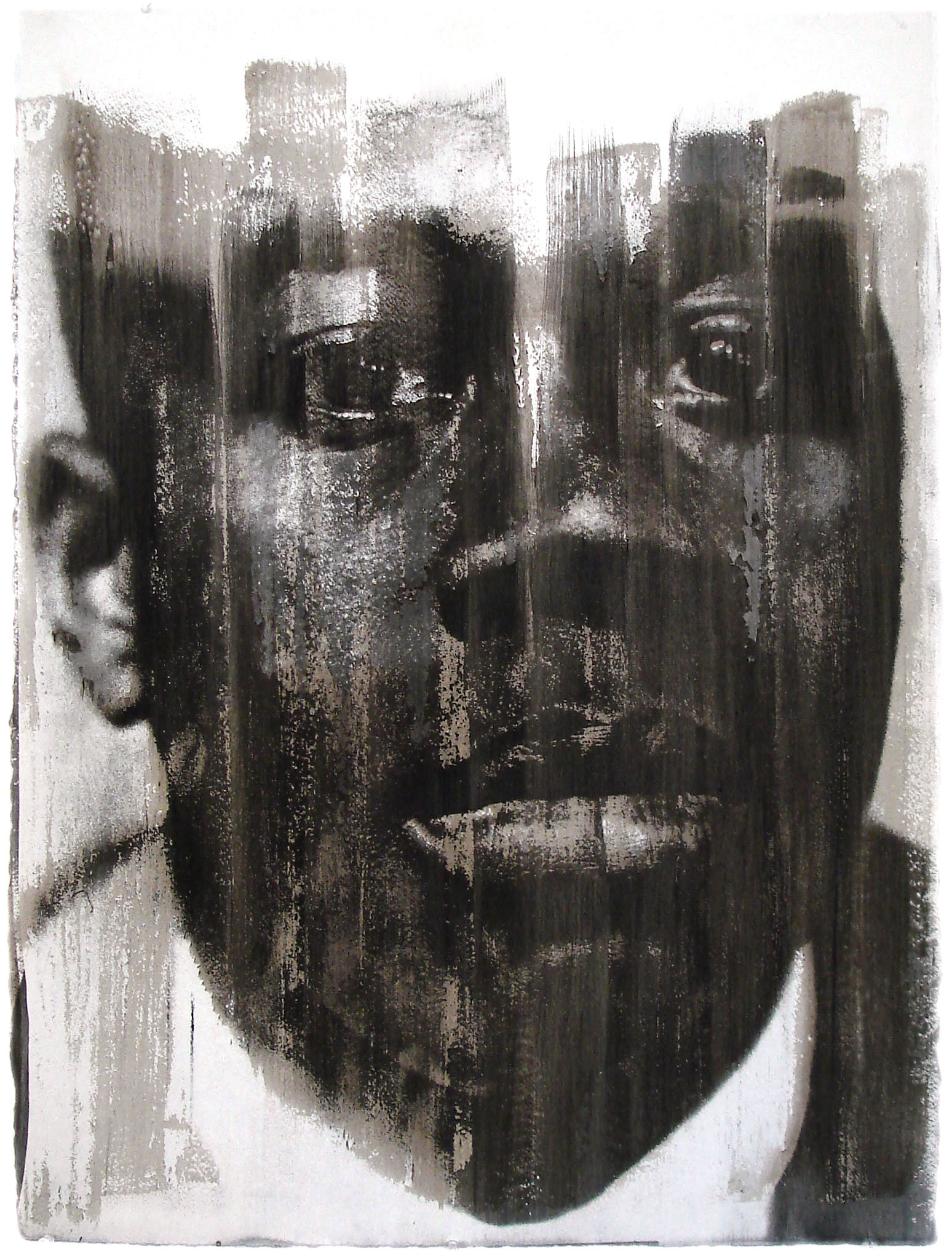
Donald E. Camp, Man Who Hears Music, Andre Raphael Smith, Earth pigment and casein mono-print, 22” X 30”, 2006

Donald E. Camp, Man Who Hears Music, Andre Raphael Smith, Earth pigment and casein mono-print, 22” X 30”, 2006

I don’t want to say much more about the ideas in there (so many more I can hardly believe it) because if you go, the show will reveal itself to you in ways you won’t expect. And you should go.

Here are some more reasons why:

Photographer Donald Camp’s elemental, giant portraits of African American men dominate the show. If you have never seen these one-offs printed with earth and casein, you owe it to yourself to see them now. These portraits tell a tale of self-invention and gravitas that overwhelms the popular culture’s focus on African American men as gangsters and gangstas. Camp is a former photographer for the Philadelphia Bulletin who manages to indict even the crappy newsprint and its quick and dirty printing methods in these masterpieces of material and social depth.
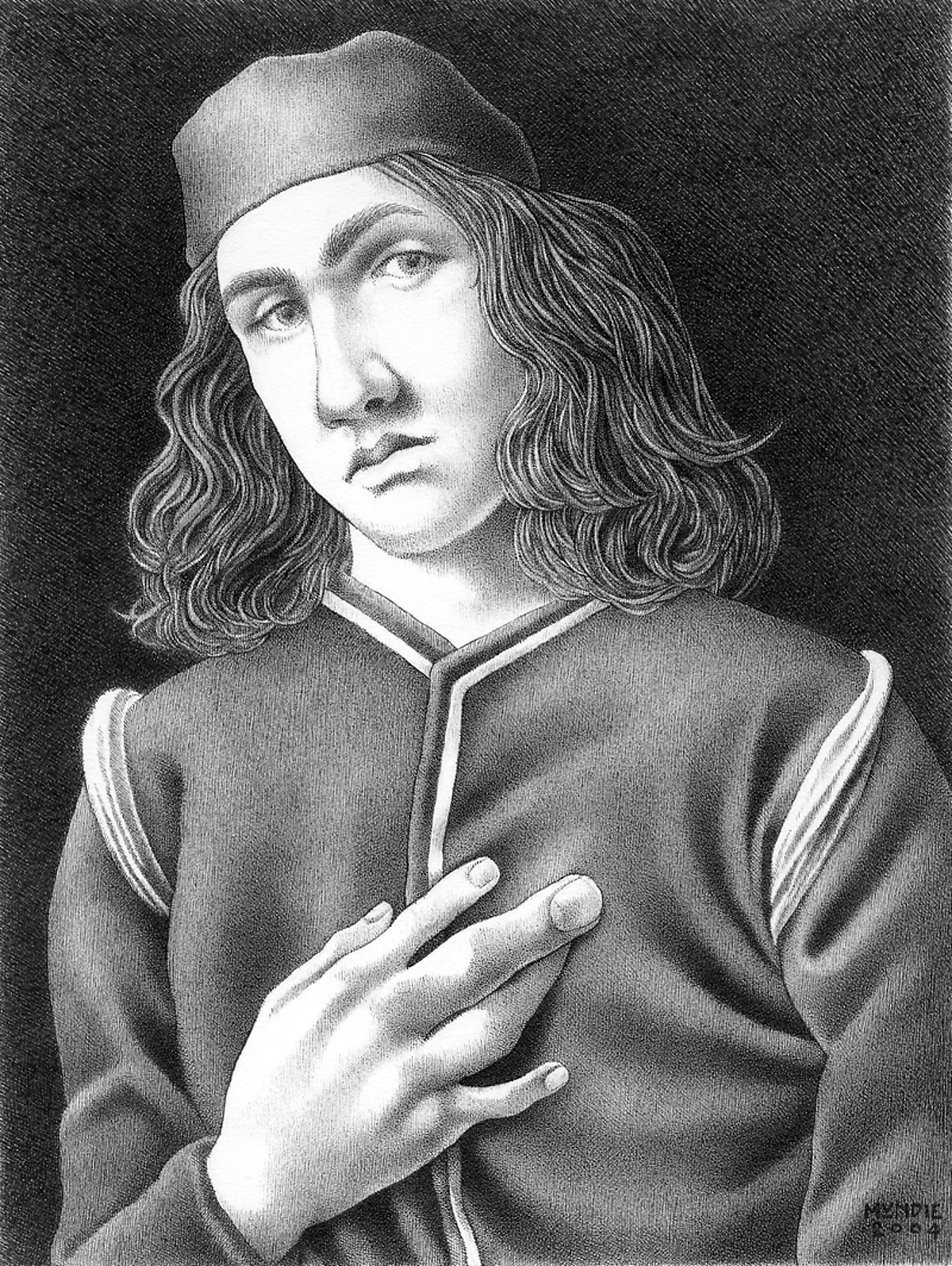
James Mundie, Portrait of a Big-fingered Boy, Pen and ink, 8” x 6”, 2004

James Mundie, Portrait of a Big-fingered Boy, Pen and ink, 8” x 6”, 2004

James G. Mundie’s small ink drawings of circus freaks–another group of outsiders reimagined, dignified, and preserved by portraits that borrow art historical compositions–stand up well, even next to Camp’s gorgeous ultra closeups. Mundie and Camp are both on a mission to reestablish into the mainstream the rejected, without tampering with the subjects’ self-images and their control of their own destiny.
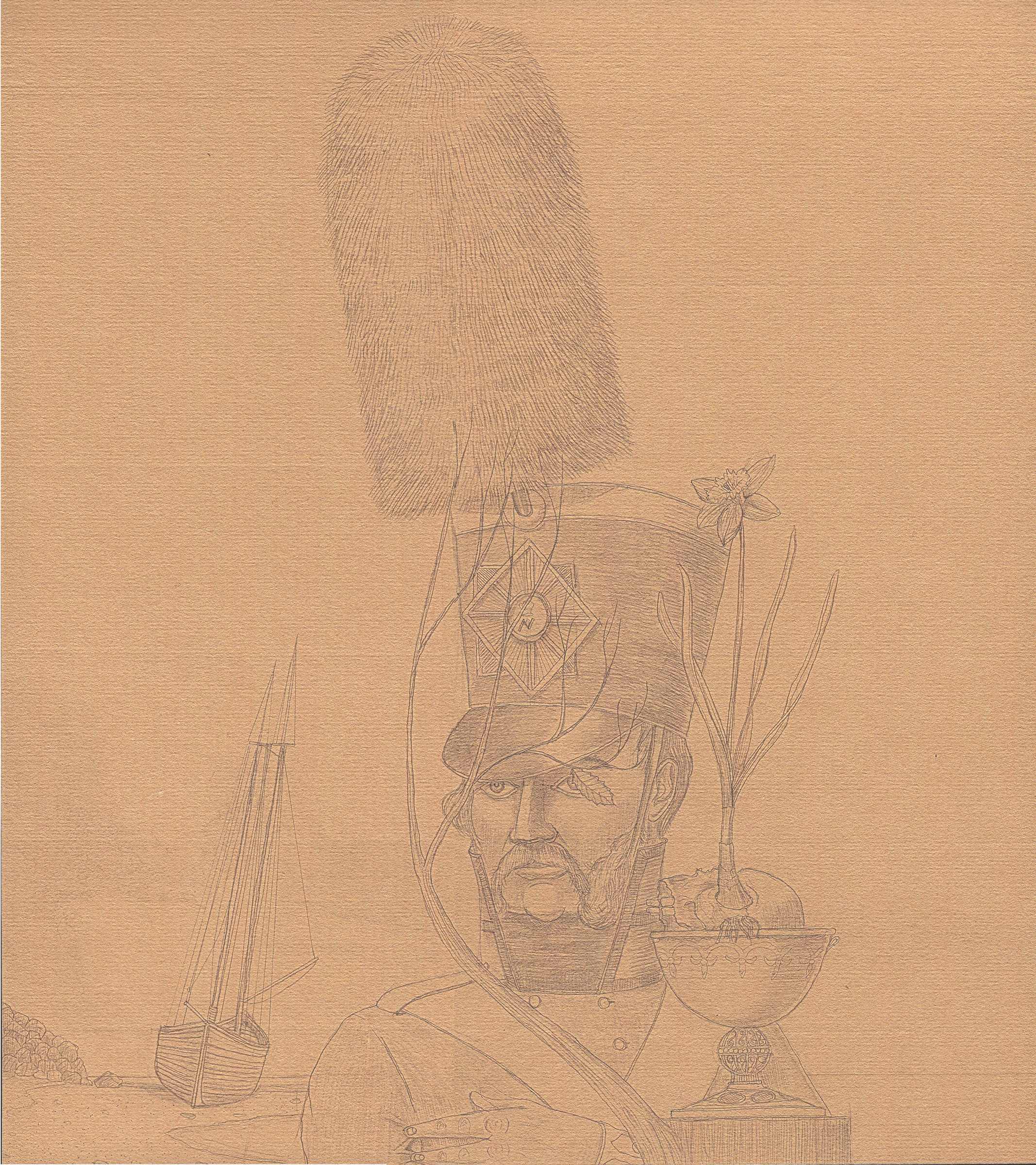
Matthew Fisher, The Ocean, Pencil on paper, 10 1/4” x 9 1/8”, 2009

Matthew Fisher, The Ocean, Pencil on paper, 10 1/4” x 9 1/8”, 2009

Two other drawing wizards–Matt Fisher and Rob Matthews–are still more reasons to see this exhibit. Fisher’s 18th Century soldiers are vulnerable and awkward, even when they cavort or daydream. The delicate drawings are everyman in costume, playing a role and yet not quite inhabiting the clothes,  adult boys who are confused about how they could possibly be who they are and where they are–models of self-doubt as modern as they are antique. The deadpan drawings are delightful and quite like the soldiers–dreamy storybook figures that leap off the page into your heart.
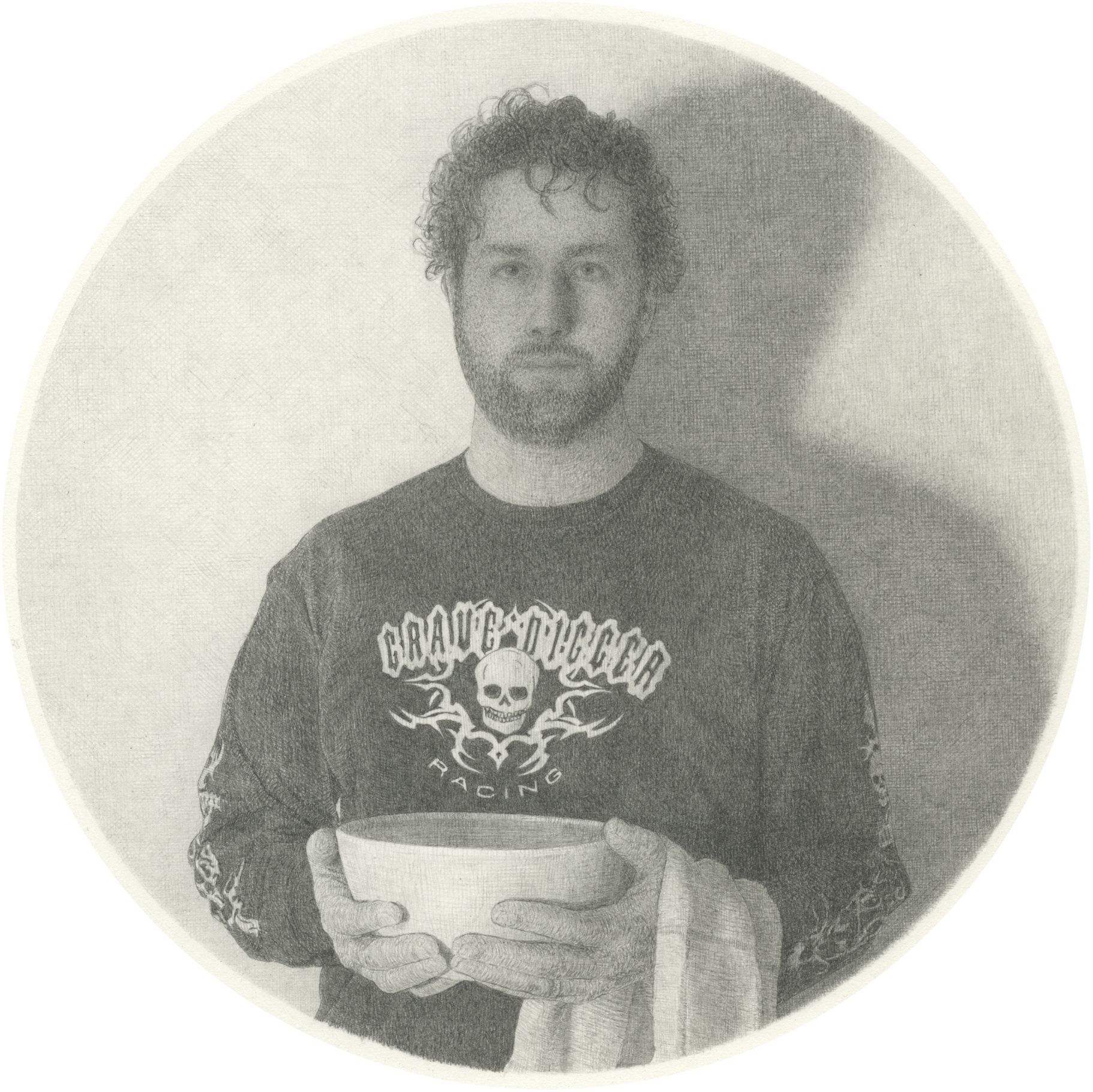
Rob Matthews, Steve, Graphite on paper, 9” X 9”, 2008

Rob Matthews, Steve, Graphite on paper, 9” X 9”, 2008

In contrast to Fisher’s figures who exist as universal soldiers of any time, Rob Matthews’ portraits are documents of this time–ordinary family and friends depicted with art historical allusions that preserve the subjects in the continuum of history, that place them in that collective memory that erases most mortals in a couple of generations. Matthews said he thinks of these as memorials, and therefore has written on the back the subjects names and particulars. The context of this show highlights all the thinking and complexity that has gone into this seemingly deadpan take on social circumstances that nearly consume individual identity.

Joshua Mosley, Commute, Still image from mixed media animation, 2003

Joshua Mosley, Commute, Still image from mixed media animation, 2003

Out on his own moon, Joshua Mosley’s claymation cyber-video Commuter uses the cell phone as the opening metaphor for journeying beyond concrete physical circumstances to some place in the imagination or the mind. The mind’s world here is futuristic, an adventure down the wormhole of technology where physical and genetic facts seem almost beside the point! The journey is playful, defying nature, gravity, and other limits–and highlighting how technology is a magical mystery tour where we can escape who we really are where we really are.
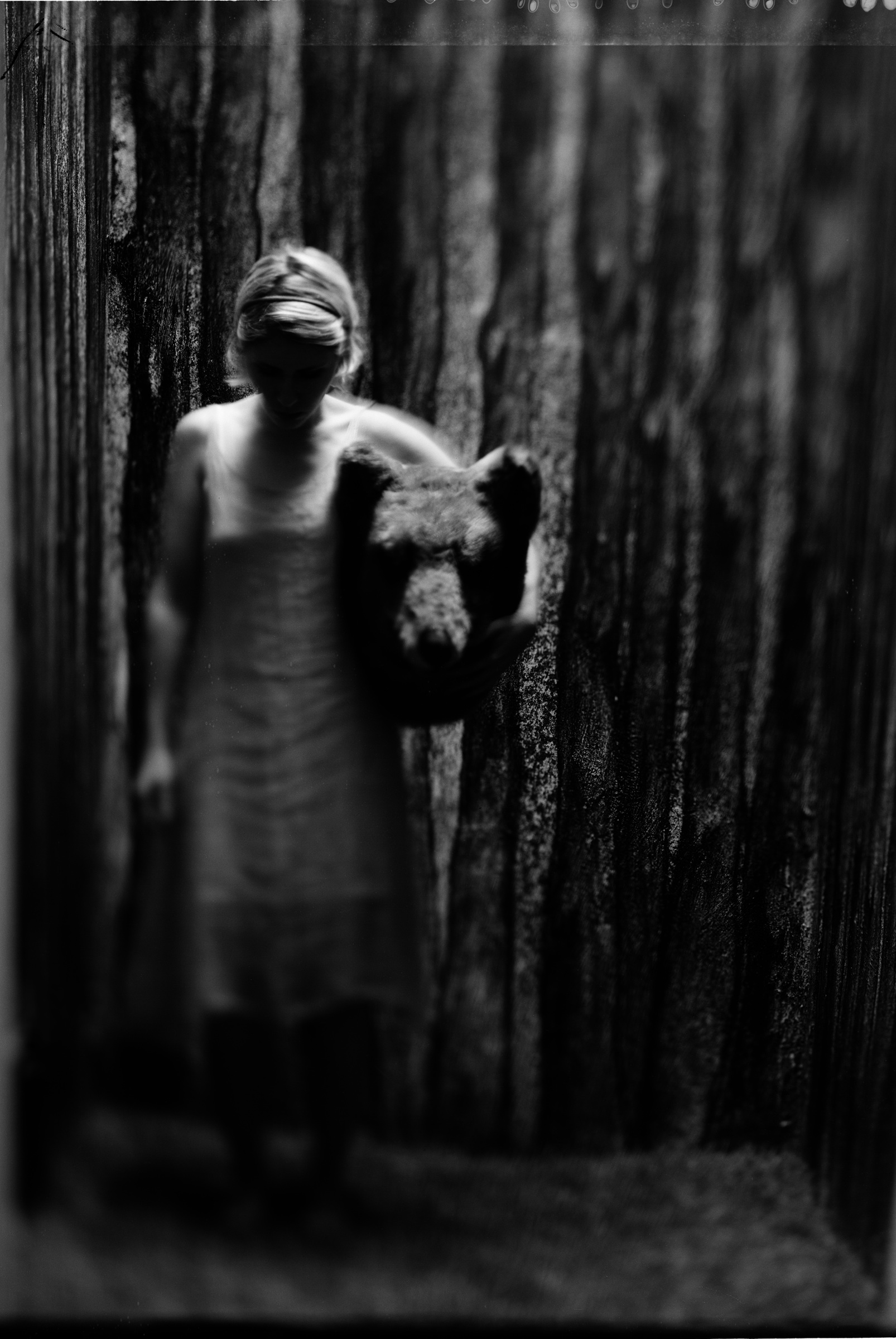
Laura Graham, Forrest, 40” x 60” inches, Archival pigment print from 4x5 film, 2006

Laura Graham, Forrest, 40” x 60” inches, Archival pigment print from 4x5 film, 2006

In the context of these complex works, Laura Graham’s large, introspective photos of women seem too large, their hints of psychological depth and mythic underpinnings not fully realized.

Beautiful Human, curated by Shelley Spector, is up to Oct. 9, 2009.Bea

This entry was posted in tags a-z and tagged , , , , , , , , . Bookmark the permalink. Post a comment or leave a trackback: Trackback URL.

6 Comments

  1. Armpriester
    Posted October 2, 2009 at 8:19 pm | Permalink

    Donald Camp’s portrait “Man Who Hears Music” feels like a man about to take a diabolical oath, that he’s not prepared for. This could explain the missing brain and watery eyes . Painting has an understated place here, when you see this work in-person the thick surface textures rise above the paper, it forces you to slow down and witness the melanin of Earth and Man attempting to merge quietly. I walked away from the photograph thinking about cyborgs and wondering if that was a photograph or something else? James Mundie repeats the oath with a pledge (hand over heart) giving us mixed messages, the big middle finger and the crossing of two fingers camouflaged in the gesture of allegiance. Freakish coincidence or the invisible communications of an Initiated thug.

  2. libby
    Posted October 3, 2009 at 2:07 pm | Permalink

    Hi, Corey, oh my gosh, I’m a little taken aback, I guess. I totally see what you’re saying about the surface textures in Don’s work–it does all those things. But cyborgs? Diabolical oath? Missing brain? Well, for what it’s worth, I see a sweet face with gentle eyes lost in thought, the very opposite of threatening.
    The print is a photo-based process, and while I understand the materials, I do not understand exactly how he gets from here to there. I just love the handmade quality of it, the quirky applications of materials, and the materials themselves, which as you point out force you to slow down and witness… (nice line by the way).
    James Mundie does give mixed messages, but there’s a part of that mixed message that comes from us and our discomfort with people who are different. I took the gesture as the subject’s own discomfort — and confrontational comfort — with his differentness. As for Mundie, like all of us, he is fascinated by difference, but also getting past it. He is memorializing, de-marginalizing, and even celebrating the differences and the samenesses.
    We are all tribal. The thugs are tribal, too. The circus freaks are a tribe of their own, too. The glory is in seeing deeper to what makes us all the same. To dwell on the tribal side is the road to war, perhaps.

  3. Armpriester
    Posted October 3, 2009 at 8:19 pm | Permalink

    Hi Libby, I’m going by the feeling of Donald Camp’s “Man Who Hears Music” portrait. The CYBORG comment comes from a feeling towards the way the materials/subject are trying to harmonize the organic (human/earth) with the inorganic (photo everything), transformation sings loud and clear in this work and I can’t get it out my head. The diabolical is featured in an effort to erase someone’s brain(via oath), some type of soft Eugenics.
    As far as the Big Fingered Boy, my thoughts are only about the portrait it self and not about the artist or even his intent. Both artists have created a living thing, I’m reacting to the art. I’m not saying James Mundie is giving us a mixed message but his portrait is. James may not even be aware of this mixed message in the work and there is no reason why he should. He created a living thing that has its own way of communicating outside the artist intent; this is what gives it life (autonomy even?). I do see the point about the presence of discomfort in this portrait but for me it’s expressed on the Boy’s face (those shifty eyes and tilt of head), not in the hand gesture. The hand appears strong, confident and purposeful. I guess I took the Freak aspect of “Big Fingered Boy” and the surreal aspect of “Man Who Hears Music” and replaced them with metaphor; this may have taken me too far or not far enough. I do hear everything your saying and that last part about war and tribes’ never even crossed my mind. My projection was about the individual in the context of humanity and you’re seeing the collective human experience.

  4. Posted October 6, 2009 at 8:00 am | Permalink

    good read thanks.

  5. libby
    Posted October 6, 2009 at 10:52 am | Permalink

    Thanks for that clarification. I especially see what you are saying about the Big Fingered Boy! As is usual with your comments, Corey, they are always interesting–food for thought.

  6. libby
    Posted October 6, 2009 at 8:49 pm | Permalink

    thanks, watercolour

Post a Comment

Your email is never published nor shared. Required fields are marked *

*
*
  • archives

  • categories

  • subscribe via rss


  • subscribe via email

    Enter your email address:

    Delivered by FeedBurner

  • recent comments

  • Visitors