

After 18 years of handing out the biggest regional prize in the arts, Pew Fellowships in the Arts has changed its m-o. Well, they’re still handing out prizes– the coveted 12 grants of $60,000. But the process is changing in 2010 in two significant ways. First, and probably most importantly, Pew has switched from an open call for applications to a MacArthur genius grant secret nominating process. Second, there’s no longer a 4-year rotation of categories with painting one year, sculpture another, etc. etc. Now, it’s open season for all categories every year. This came as a surprise to us as it will to every artist in the neighborhood. But we think it’s exciting. It sounds to us like they’re trying to reach the best there is out there and especially artists who are working across categories and in new forms. We think this is a change to keep the awards fresh and in touch with the changes of society and especially of the arts.
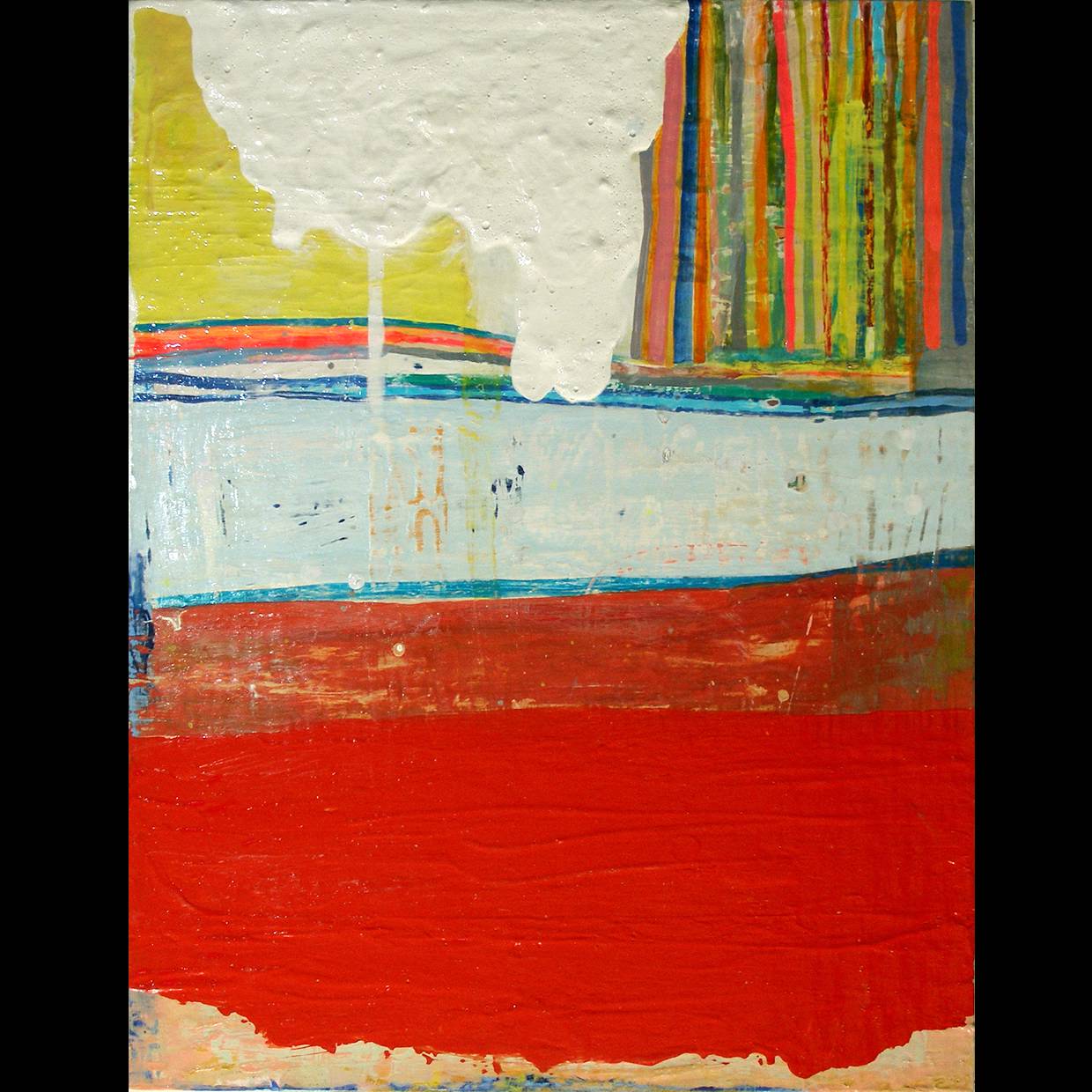
Anne Seidman (2008 fellow), Untitled, 2006, water based paint, 15”x13” Photo courtesy of Pew Fellowships.
Melissa Franklin of the Pew called us up to give us the scoop.
“We’ve thought about this for a while. We’ve had it on our minds that there has to be a better way to review materials. We want to put into place a more thoughtful and thorough review process” She also said the context for the grant making has changed because the art has changed. We asked her if applications were down and she said they were down slightly and we think that has to be a concern.
Franklin said the grant criteria will remain unchanged. Pew will award grants on the basis of artistic excellence, artistic commitment and on the impact of the grant on the artist and impact of the artist’s work on society.
The traditional categories into which they forced artists to define themselves have been given the heave-ho. ”The categories have always been problematic for a lot of artists. We have artists who have to squeeze themselves into categories. Others work in ways that defy the categories. Now we’re looking at any artistic discipline this year.
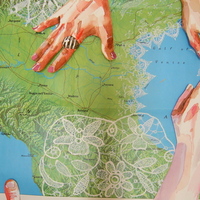
Jennifer Levonian (2009 fellow), still from You, Starbucks, Watercolor and White-Out on found map, size varies. Photo courtesy of Pew Fellowships.
As for the application, it’s been changed as well. ”Our old questions are not very good. For example, we don’t need to know what people will do with the money. But what we do need to know is what they’re thinking about and where they want to go with their art.
“Another thing, in the past we’d give $60,000 and say ‘See ya.’ And that’s not good enough. We need to engage more deeply with the recipients. We’re going to work out what each artist needs, whether it’s to make connections or introductions or technical assistance.”
The nomination process.
In the new nomination process, 30 nominators will select 2 artists each. The artists who are nominated are invited to apply. The categories will be literature, visual arts, dance and music, etc. (see all the categories on the Pew website). The nominators — who Franklin said will be people with deep knowledge of the arts in the region — will change every year and they will be anonymous to protect them from undue influence and pressure from their friends. The nominators will have to write the reasons for their selection and that narrative will become a part of the information about the artist as they go through the selection process. ”An outside person can often talk about the work better than the artist.”
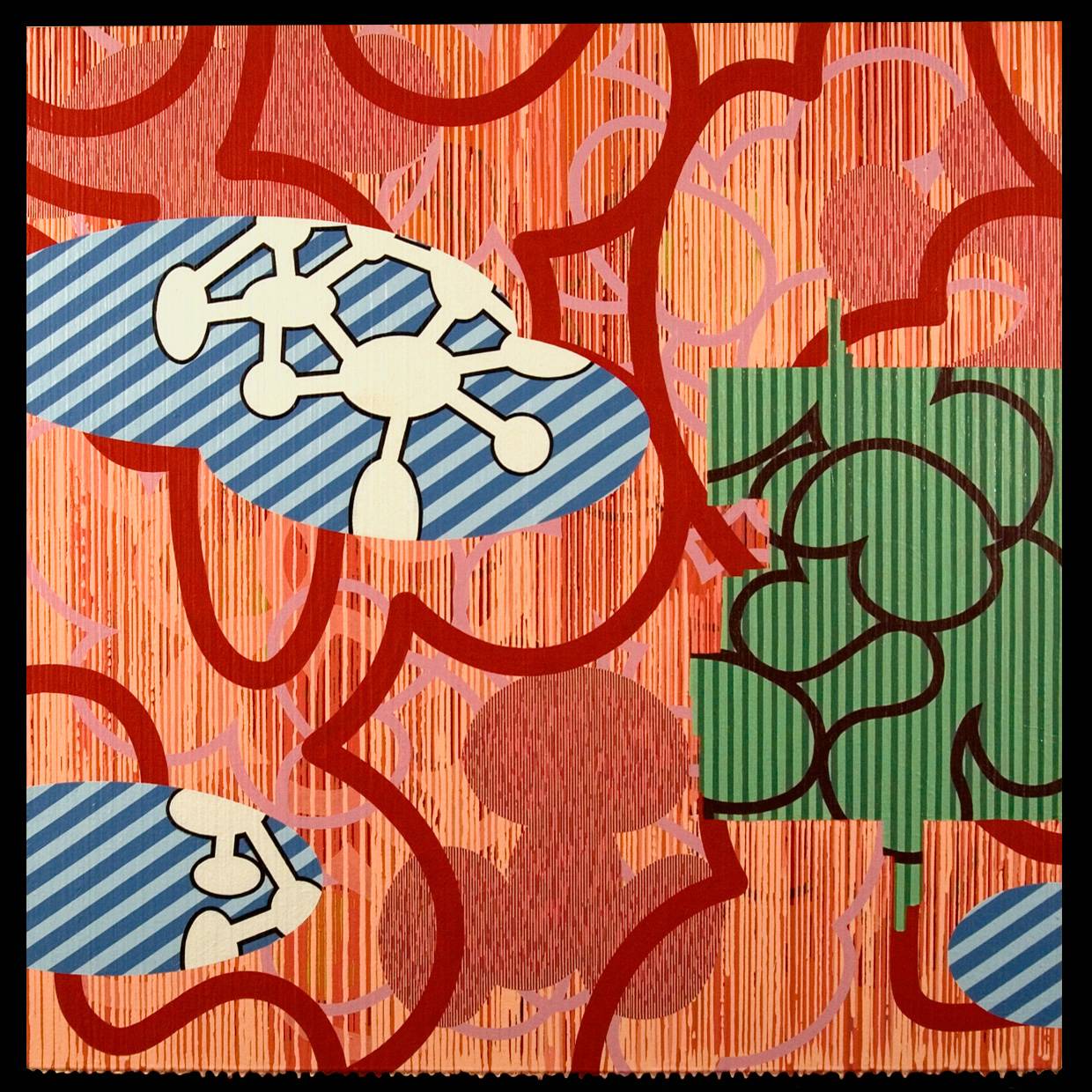
Charles Burwell (2008 fellow), Red Line with Three Figures, 2006, oil on canvas, 36”x36” Photo courtesy of Pew Fellowships.
After the nominated artists apply they will be evaluated by experts around the country, who will look at the materials. Only those artists ranked high enough will go to the final interdisciplinary panel (same as now).
“The old open application assumes it’s more egalitarian and it also assumes people know about us. But some people may not even apply to us.” (Pew historically had a 97% rejection rate of all applicants –that gets around and people who ought to be applying sometimes get discouraged).
Now the 60 nominated applicants have a 20% shot.
“This new method gives us the freedom to be proactive about people doing interesting work right now.” We asked if she could give us an example of who that might be and she mentioned King Brit and young artists in general.
We asked if the names of the 60 artists nominated would be made public each year and the answer was no. When the 12 grants are announced Pew will release the 12 names and the names of the final evaluators.
Franklin told us she’d been working for a year on this overhaul. She said she worked with Cynthia Mayeda, head of external affairs at the Brooklyn Museum on the review. Franklin also said she consulted with USA Artists, Creative Capital and artists who had been on the Pew panels in the past like Amy Sillman and Kevin Young.
Over their 18 years in operation, Pew Fellowships has had 7,900 applications and has given grants to 237 artists.
“We hope people will welcome this change,” Franklin said.
For more information about this big change check the Pew Fellowships website which has a FAQ page and other information.








20 Comments
This is pure laziness and nepotism meant to further entrench the cache of area institutions and the artists associated with them. The Pew should be ashamed.
For those artists not interested in working within the Institutional Philadelphia framework, you can forget about the pew.
This is what S-P-I-N looks like.
It’s all who you know now.
Call me crazy, but this new system seems slightly unfair to a lot of artists not “connected” in the traditional sense. The new system operates on the presumption that of those 30 people, those within your field are completely aware of all the artists working hard out there, which just seems a bit presumptuous. If you are dedicated to your practice but aren’t out there being seen, you can pretty much forget it. To have your work even considered is no longer predicated on the quality of your work but, problematically and firstly, on whether or not these 30 people even know of your work as well as how they, themselves, regard your work. The only advantage I can see would be that you can potentially be asked to apply each year, whereas with the prior system one could only apply when your categories were up.
I don’t know. Pew seems to sincerely want to mix it up and get money to people who either don’t know they exist or who have given up applying for the Pew because they’re discouraged… who wants to apply when there’s a 97% chance you’ll be rejected. There were gripes about the old process. There will be gripes about the new process. Going to a secret nominating system makes it seem less democratic but is it going to be? How democratic is an open call application process anyway? When we asked Melissa Franklin who she had in mind as her underserved population she mentioned King Britt and young people. How bad is that? I think we will have to see what the change brings when the winners are announced. If you look at the winners historically they are 237 artists working in pretty traditional ways. What I get out of this is that they want to reach artists working in non-traditional ways in non-traditional media.
97% rejection is better than feeling 100% completely rejected.
I believe the old system spurred artists on to make better work for their application. It created a higher caliber art scene and genuine risk-taking. An artist’s time is better spent in the studio than schmoozing curators.
I see a lot of art but I am the first to admit I don’t see even half of what is out there.
It is a question– who will the secret local nominators be? Who has the deep knowledge of the scene they’re looking for and who will they nominate? Pew must have a list of people in mind but they’re not sharing. I’m assuming they want nominators in the areas where they feel they had holes before in who was applying — groups of young artists and …using the King Britt example, music mashup artist/DJs. It’s all speculation which is why it’s going to make people nuts. Secrecy produces unhappiness and there’s no way to get around that…..I’m adopting a wait and see attitude. Let’s see who the 2010 Pew fellows are and then read the tea leaves.
I like the change…now I can keep making work, and let it speak for itself to those who are nominating. Takes some pressure off me for something I don’t like (applications) and allows me to approach the potential for success from the other direction, where I’m stronger. It may seem risky to some, but it’s a proven MO, and I think it will spread itself out nicely. We’ll see.
I think that all systems have their shortcomings. Everyone gets left out some of the time. My own feeling is this is like politics. It’s a new broom to sweep clean. Now we’re ready for a new view on who has the goods and what the goods are. The fact that Melissa mentioned King Brit to me is a sign of being less conservative, more open to a broader definition of art. That is reinforced by the switch from hidebound categories. Now (if selected of course) you can show them a mix of video, word, and painting, lets say.
But the 30 people with a deep knowledge did set us wondering. Where to find these 30 people? You mean in 3 years you will be able to find 90? In 10 years 300? I sure hope they mean to have turnover, or we’ll be getting the same old same old from year to year. I do wonder how to find people who can get beyond the institutional stick-in-the-muddiness of art school old boys’ networks. On the other hand, I can think of people who are in those institutional roles who would make excellent, surprising choices.
I suppose somewhere inside me I think that life is unfair. So let’s find ways to try to change the biases, shift the biases, and shake things up.
I can’t believe more people aren’t excited however about not having to fill out a torturous application form with so little chance of success.
This is disastrous. There is such a hefty list of potential problems with this I will not begin to list them here. What a great way to guarantee that only those artists who are known to the tiny pool of local nominators (e.g. those personally known to them, favorites they’d like to see succeed, and those already making it into shows, galleries, collections). Wasn’t the beauty of the open call discovery? To paraphrase Richard Flood on the benefit of working away from the center: “My audiences do not already know what they think about what they are about to see.” Well, good riddance to impartiality in what had been for that reason a unique and keenly coveted prize.
I don’t think it’s a disaster. And you could argue that Pew’s old way of doing business was equally fraught with inside politics where who you knew made all the difference. Isn’t Richard Flood now at the New Museum–I guess he’s re-evaluated working away from the center. But I do think Pew wants to work away from the center and that’s why they are doing this change.
OK. Its a change- but in the past I would be surprised when the awards were made and I didn’t know someone. Sometimes pleasantly, sometimes not. It was an open process. Now… in difference to the King Britt example (whose work is great) – citing King Britt as an example is mentioning someone who is known locally and nationally. With the new system you have to be recognized to be recognized to certain extent. It seems biased against young artists not the opposite. Conversely would someone nominate a older artist? The new system probably wouldn’t give a Pew to someone like Rudy Staffel who won in the past when quite old by submitting and by being a wonderful artist. AND the nominator would have to be local to know the local artists to niminate. Therefore the situation is rife with incestuous issues that weren’t there before when the jurors were from out of the area.
there is so much here to make fun of:
““The old open application assumes it’s more egalitarian and it also assumes people know about us. But some people may not even apply to us.” (Pew historically had a 97% rejection rate of all applicants –that gets around and people who ought to be applying sometimes get discouraged).
Now the 60 nominated applicants have a 20% shot.”
let me explain math: the odds of getting in for those that aren’t nominated by the secret committee: 0%
the king britt example that keeps getting mentioned is nothing more than fucking embarrassing. as was mentioned above, he’s a well-known, mid-career POPULAR (by which i mean working in a popular genre) artist. sure, it might make pew look hip and helps get some eyeballs because of name recognition, but i’m not sure how it encourages risk-taking or even serious work.
“Franklin who she had in mind as her underserved population she mentioned King Britt and young people. How bad is that?” – Uh, it’s kinda bad. This doesn’t seem to jibe with the concern that “people are getting discouraged.” If you are a young person, either you haven’t applied much to Pew before, or you are extraordinarily easily discouraged, in which case maybe a life in art is not for you.
I also don’t understand at all why the nominating panel can’t be made public after the awards are given. What harm could there possibly be in that?
I am pretty dismayed by this decision–although maybe it just makes transparent what already happens in effect…(did someone already say that?)
As the previous post says, you have a 0% chance if you are not nominated and that feeling of hope, not to mention the exposure to the jury’s eyeballs (regardless of whether you win or not) is really important and made the Pew stand out as a reason for artists to stick around Philly…
This surely discriminates against those who are unknown to the nominators–obviously, right? So that alone is lame because we all know artists in hiding who may be overlooked for that reason alone. So yup, at its worst–it could end up reinforcing a cynical social climbing game. Ugh. As a former juror I’d like to think I am immune to persuasion of that nature (not to mention that really doesn’t make a difference HOW the applicant pool is generated as as you still have that bias with whomever you end up jurying (assuming people you know are applying))
Not mentioned in that press release from Pew:
Will the nominators change every year? If they don’t I think there’s even more reason to be upset. MacArthur has new nominators all the time.
I don’t think we can make prediction about how the nominators will choose and who they will be biased for or against. An open process, while a pain in the ass, leaves the power to decide to the community it supposed to be serving and not with the funding inst. It has a big psychological effect. I think the hope thing is very important.
As a former winner AND former juror, I hope they rethink this.
Sid, you would be a prime candidate for a local nominator, I’d think. And your range of knowledge would bring depth and breadth to who would get nominated…people like Rudy Stafel, eg. Judith I believe Melissa said the nominators would change every year which is good. And I do think they should make those names public. Quid pro quo will happen regardless of names being kept secret. I do think there is the potential for incestuous issues in any prize involving money. I don’t think you can get around it.
there can’t be any quid pro quo if the names are released *after* the process is done. the pew FAQ is a bit ambiguous on this point, but it seems that the names of the nominators will never be released. if they really want to “ensure transparency and integrity,” i don’t see the harm of letting people look at who nominated.
I’ve juried LOTS of things at this point. I’m not crazy about my name being released. I once juried a friend OUT of something and never heard the end of it. But hey–I was trying to be FAIR!
Also–I find it repellent to be schmoozed by some desperate character if they know I’m on a panel (or were). FYI–I never was on a jury that seemed to act with a c/overt agenda to promote their friends or certain groups. If that happened at all, it was subconsciously done. They always seemed to be trying very hard to be very fair. That was my experience anyway.
But its probably best to release the names. I do agree with that. I’m just sayin’…
I hope that these folks over at the Pew, realize that I’m the illegitimate love child of the Dufala Brothers and Ryan Trecartin. Then maybe…….
Just stop giving a shit. Make what you make!!
Oh….my hometown…zzzzzzzzzzzzzzzzzzzzz….
JM
“Also–I find it repellent to be schmoozed by some desperate character if they know I’m on a panel (or were). FYI–I never was on a jury that seemed to act with a c/overt agenda to promote their friends or certain groups. If that happened at all, it was subconsciously done. They always seemed to be trying very hard to be very fair. That was my experience anyway.”
well – my point was that the jury could be made public *after* the process. i’m not certain what purpose attempted retroactive schmoozing would serve, or why anyone would do it.
i’m not saying that people would necessarily consciously act to help their friends, but that their fields of knowledge are necessarily, and that will be reflected (versus an open call that might bring in heretofore unknown work). as larry david says, it’s a commission-omission thing.
Jesse–
I had a pretty silly experience where someone felt the need to really ingratiate themselves endlessly with me and act as though we were best buds because they got a grant. In actuality I had abstained from that person’s discussion as I personally vehemently disliked them to the point that I wasn’t sure how objective I could be. That was a specific incident I was recalling when I wrote that. I don’t think its happened any other time, though.
I *was* agreeing the nominators and jurors names should be public. But its like having a target drawn on your chest, sometimes. Everyone hates you. Many suspect you are a nepotistic, lazy sleaze bag with an agenda. Except the winners. Its not worth the $ (or the time) they pay you so you do all that as somewhat of a service for something you believe in. No good deed goes unpunished.
Your comments about the knowledge of the jury are most accurate. A double edged sword. FYI–I am just about to jury something wherein I know close to half the applicants.
I have been watching the back and forth on this and I have to say that I find it hard to believe that no one knows how to conduct a fair competition.
If you use judges from out of town from the start, who see every entry, then you do away with 90% of the problems discussed here.
Of course the choice of judges will favor a certain aesthetic. But if there are more than one judge that could be dealt with too. The more diversity on a panel the less likelihood of it being skewed in one direction.
You can have a cut off point for entries based on the amount that can be handled by the administrators and the budget. First come, first serve maybe?
It has to be blind, no visible indication of who the artist is, no resumes etc.
Every kid over the age of 6 can use a videocam today so there’s no reason that these things can’t be taped. I offer to tape any local competition FREE of charge as long as the artists get to see the final tape. This would serve as proof of a fair competition and could be educational on many levels. Some people have already started to do this.
I’ve been a judge too and have been around during the judging of shows and have seen some pretty bad things. I’ve heard some nightmare stories from others too. I’m glad to hear that some have had only good experiences but I would rather see a better system in place to be sure.
Each case is different but if being fair is the goal it can easily be accomplished. Be creative, you’re artists!